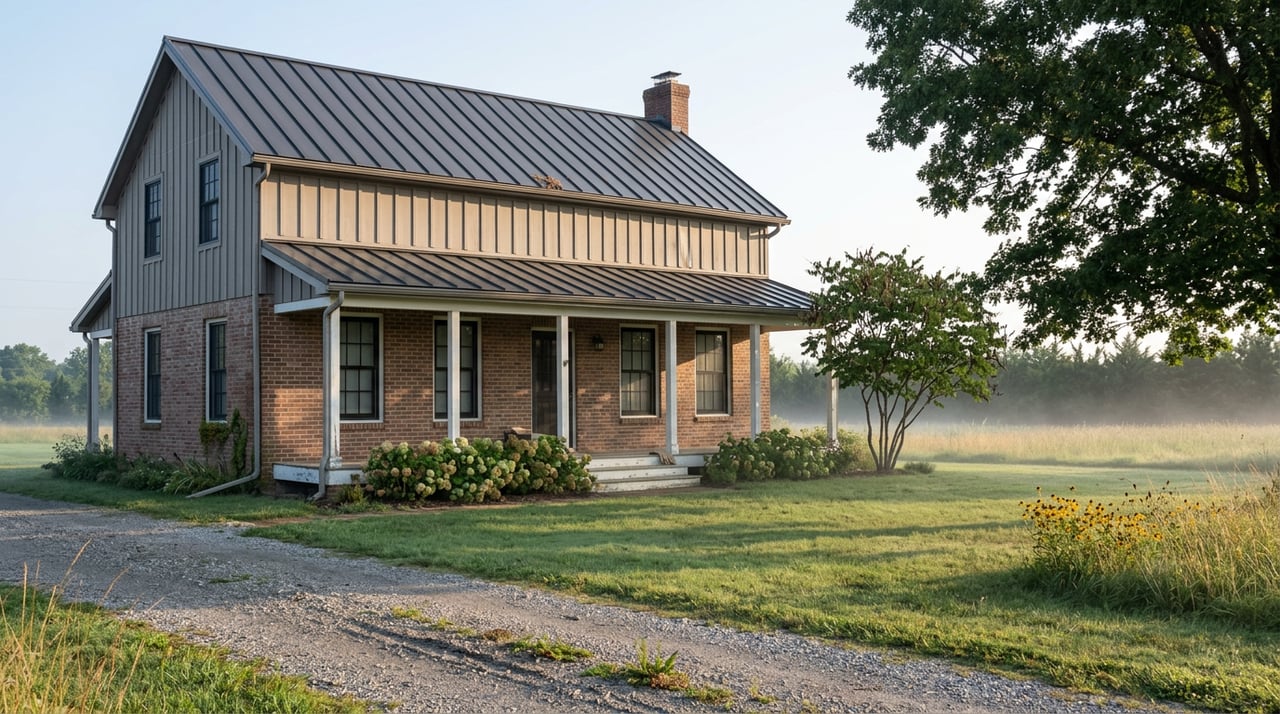
Why Mineral Rights Matter in Muskingum County Land Deals
August 13, 2026
August 13, 2026
In 1916, a woman named Elvira Sprague and her husband sold a piece of land in Muskingum County to a man named Fred H. Waters. They kept the oil and gas rights for themselves, a routine move at the time, and recorded it in the deed. Sprague died in 1931. Her daughters inherited the mineral rights. In 1936, Waters sold the surface to his four children, and the new deed said nothing about the oil and gas reservation from twenty years earlier. For anyone looking at that 1936 deed cold, the land looked whole. Surface and minerals, all one package.
It wasn't. And when the dispute finally reached the Ohio Supreme Court in the case Heifner v. Bradford, decided in 1983, the court sided with Sprague's descendants. A 1957 affidavit recording the mineral inheritance, filed decades after the original reservation, was enough to keep that severed interest alive. The court reasoned that the affidavit "is a transfer by will or descent and, thus, is a title transaction," which meant it counted as an event that preserved the mineral owner's claim under Ohio's Marketable Title Act. The surface deed's silence didn't matter. The paper trail underneath it did.
That case is more than forty years old, but the mechanism it describes is still live in Muskingum County today. If you're buying or selling acreage here, whether it's a hunting tract off Claysville Road, a build site near Blue Rock, or a working farm outside Frazeysburg, the price per acre is only half the transaction. The other half is figuring out whether the seller actually owns everything underneath the ground they're selling.
Minerals are presumed to travel with the land unless a deed specifically carves them out. That carve-out is called a severance, and it doesn't have to appear on your current deed to exist. It can sit several owners back in the chain of title, recorded once in 1916 or 1943 and then never mentioned again by anyone who bought or sold the surface afterward. The Sprague reservation is a textbook example: two generations of surface owners bought and sold the land with warranty deeds that never referenced the original oil and gas exception, and the reservation stayed valid anyway.
Muskingum County has a long documented history of exactly this kind of layered ownership, partly because the county sits in a part of Ohio where oil and gas activity goes back more than a century, long before anyone was thinking about the Utica Shale. Older severances are common enough that a title company working a rural parcel here treats a mineral search as standard practice, not a special request.
Ohio has tried to clean this up twice. The broader Marketable Title Act gives a forty-year look-back window for most property interests. A more specific law, the Dormant Mineral Act, targets severed mineral rights directly: if a mineral interest sits unused for twenty years with no qualifying activity, the surface owner can claim it back.
The problem for buyers is that "qualifying activity" is a longer list than most people expect. Under Ohio Revised Code 5301.56, the twenty-year clock resets if any of the following happens within that window:
That last trigger is the one that catches people. It doesn't take an active well to keep a severed mineral interest alive. It takes a single recorded document, sometimes one that has nothing to do with oil and gas on its face, like a probate filing settling an estate. That's precisely what happened in the Sprague case: a 1957 affidavit tied to an inheritance, not a lease or a well permit, was what kept the mineral rights out of the surface owner's hands.
A missed severance doesn't usually blow up a deal outright. It shows up as friction, and the friction lands in a few predictable places:
None of this is legal advice, and every one of these situations should go through a title company or an attorney who can pull the actual chain of title. What a buyer or seller can do without a law degree is ask the direct question early: does this deed include the minerals, or were they reserved at some point in the chain, and if so, when.
Once ownership is settled, the second half of the picture is what land like this costs right now. Current listings show real range depending on what the parcel is for. Recreational and hunting tracts in Muskingum County have recently averaged around $12,500 an acre, with listing prices for hunting-specific properties averaging near $560,000. Rural land overall, including farms and larger acreage packages, has carried an average listing price above $359,000. For comparison, the county's broader residential market (homes, not raw acreage) showed an average sale price of $176,401 and an average of $93 per square foot as of early June 2026, with typical homes spending about 68 days on market.
Location inside the county moves the number as much as acreage does. Current per-town value estimates show meaningful spread:
| Town | Typical Home Value |
|---|---|
| Zanesville | $170,990 |
| Nashport | $272,097 |
| New Concord | $230,019 |
| Dresden | $180,934 |
| Mount Perry | $241,905 |
| Blue Rock | $163,181 |
A buyer comparing a Nashport parcel to a Blue Rock parcel isn't just comparing acreage and road frontage. They're comparing two different pricing environments within the same county, on top of whatever the mineral rights search turns up underneath either one.
For anyone buying acreage with an existing well, or planning to drill one, there's a related rule worth knowing. Under current Ohio Department of Natural Resources policy, updated as of July 2026, any water well within 1,500 feet of a proposed horizontal oil or gas wellhead must be sampled and the results submitted to the state before drilling can begin. It's a protective measure, and it means a buyer whose parcel sits near active or future drilling has a built-in record of their water quality at the time of drilling, which matters if a dispute ever comes up later. You can review the full ODNR policy on horizontal wells directly.
Does a mineral rights issue affect my ability to get a mortgage? It can, particularly on larger rural parcels. Some lenders want mineral ownership questions resolved or clearly disclosed before funding. This varies by lender and by how the title company writes up the exception, so it's worth raising early with whoever is financing the purchase.
How do I find out if my land's minerals were severed? A title company or attorney doing a mineral-specific search through the Muskingum County Recorder's Office in Zanesville can trace the chain of title back far enough to spot a reservation, even one recorded decades ago. This is a different, deeper search than a standard residential title check.
Does this only matter for large acreage, or does it apply to smaller lots too? It can apply to any parcel where minerals were ever reserved in a prior deed, regardless of current lot size. Older, larger farm tracts that were later subdivided are the most common place this shows up, since the original reservation often predates the subdivision.
If you're weighing a piece of acreage in Muskingum County, or trying to price a family parcel accurately before listing it, the ownership question is worth settling before the purchase agreement, not after. Brandon Emmanuel works with buyers and sellers across Southeast Ohio's rural and recreational land market and can help you understand what a specific parcel's title history means for your offer or your asking price. Let's Connect.
Stay up to date on the latest real estate trends.






Get assistance in determining current property value, crafting a competitive offer, writing and negotiating a contract, and much more. Contact me today.